River Babies Series
Where Do We Go From Here?
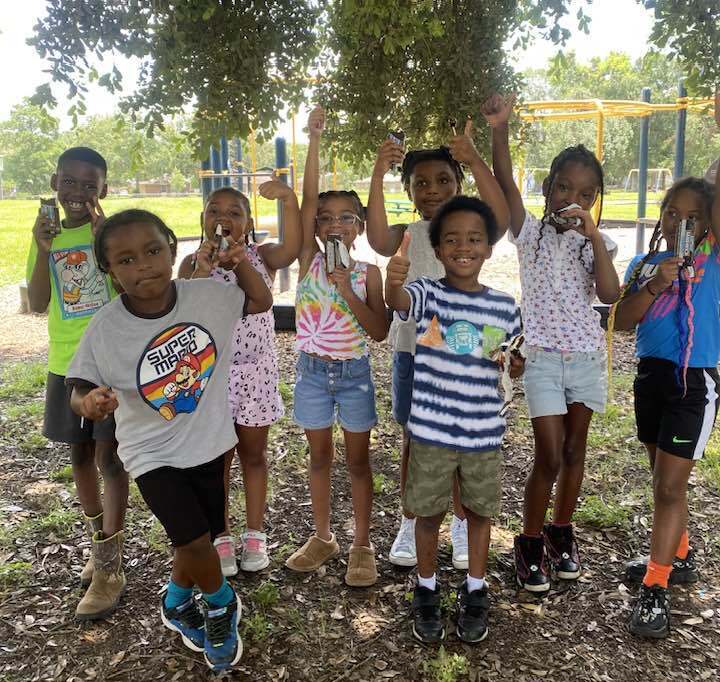
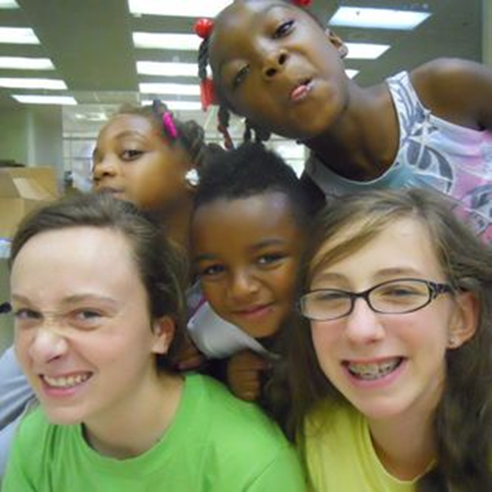
I have taken you along on my own personal journey to discover why we have so many poor urban Black children — the “River Babies.”
We sought to answer one question: Where do these “River Babies” come from? One of my main discoveries is that poor urban Black children did not simply fall out of middle-class life and land in poverty; they grew up in it. Their parents and grandparents were poor. This is generational poverty: “River Babies” beget “River Babies,” and poverty produces poverty.
In general, poverty is “sticky.” White children in Appalachia and Black children in economically distressed urban areas both face limited upward mobility, which illustrates the persistent nature of generational poverty. Yet research consistently finds that poor White children are more likely to enter the middle class than poor Black children (roughly 25% versus 10–15%). And poverty is a much larger problem for Black children overall, with child poverty rates historically around 25% compared to roughly 8–10% for White children. There are many “River Babies,” and for them, poverty is significantly more “sticky.”
This leads to a deeper question: Why are there so many poor urban Black children, and why is poverty so much stickier for them? A major factor is the concentration of poverty in many Black urban communities, closely tied to historic patterns of segregation we have outlined earlier. While many believe segregation ended with Jim Crow, scholars argue we are witnessing renewed forms of segregation in certain domains of American life.
As a country we have moved from De Jure Segregation (segregation “by law” — like the Jim Crow laws) to De Facto Segregation (segregation “by practice” — like “White Flight”). Today, it is more class segregation than race. It may not be the same forces that brought them there that are keeping them there — but they are still in the “River.” By nearly every metric, poor urban Black children are much worse off than most.
“De facto segregation is widely considered a major contributor to persistent urban poverty. So, as Dr. Martin Luther King Jr. asked in 1967: Where do we go from here?”
Dr. Martin Luther King Jr., 1967
Three Steps Toward Beloved Community
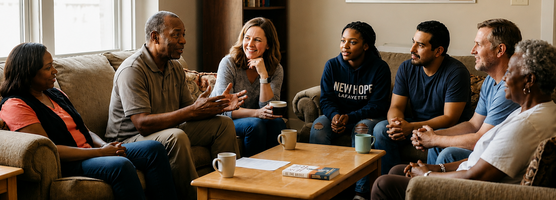
The three steps I recommend to positively impact urban Black child poverty are my personal adaptation of what is known as Transformative Justice. The first step is for White individuals — and churches in particular — to initiate relationships with Black urban churches and families through intentionally designed, diverse groups that meet regularly. The onus is on White communities to take this initiative, partly because transportation can be such a significant barrier for lower-income families. Bringing people of different races and classes together is a natural starting point for overcoming segregation, and the goal is cross-racial friendship — ultimately leading to what Dr. King called the “Beloved Community.”
The second step is to develop a deep understanding of the problems within one’s own local community. Studying Chicago’s challenges while living in New Orleans has limited value; meaningful change begins where one lives. This understanding should be firmly grounded in human relationships, where storytelling helps participants become aware of the lived experiences and unique challenges that people different from themselves face.
The third step is to address the harms that have occurred. Awareness alone is not enough — harms must be addressed thoughtfully, because poorly designed solutions can unintentionally create new problems. Transformative Justice (TJ) focuses on addressing harm in ways that are constructive and broadly acceptable.
In practice, that mindset makes problem-solving feel safer and more collaborative. The ultimate goal is to identify and address underlying causes so that similar harms do not occur in the future.
With this third step, however, I would add a twist: the solutions must benefit all poor children, not just poor urban Black children. The policies and systems that keep Black urban children poor more often than not affect all children living in poverty. Since Black children make up such a large share of poor children, solutions that benefit all poor children will naturally benefit Black children as well. Including all children also prevents blowback from groups that weren’t part of the process or fail to see how their own community benefits.
Addressing Isolation Directly
Since de jure segregation helped create the “River Baby” problem and de facto segregation continues to sustain it, racial and economic isolation must be addressed directly. The United States remains highly segregated in many areas:
This lack of shared space limits the chance to understand one another’s experiences and build meaningful relationships. Contact theory suggests sustained intergroup contact can reduce prejudice; White middle-class individuals with regular, meaningful contact with minorities are often more aware of and responsive to racial issues, and some surveys suggest White Evangelicals with close Black friendships are modestly more likely to acknowledge structural racism. In this context, the “Beloved Community” can begin to take shape — a state of peace grounded in justice and mutual care.
Understanding Local Problems
One of the biggest obstacles to understanding a problem is the assumption that we already do. Unlearning incomplete conclusions and recognizing hidden biases is hard. My own “pivotal moment” came through a relationship with Michael, the grandfather of one of our students.
Michael grew up in a family involved in the drug trade. His brother chose a different path and planned to attend college, but was tragically killed while breaking up a fight. At that point, Michael said he “lost all hope” and eventually spent decades in prison for drug-related crimes. I came to see that one of the biggest differences between Michael and me was not simply his incarceration, but my access to stable opportunities, mentors, and supportive environments. His story helped me see that our present circumstances are often deeply shaped by the past.
Working Toward Solutions
I recommend working together through the lens of Transformative Justice rather than more traditional frameworks such as Truth and Reconciliation (T&R) or Reparations. In communities like Greenville, South Carolina, T&R efforts did successfully memorialize racial harms long hidden from view. The aim was for those responsible to take ownership and correct past wrongs. While that happens to a degree, the underlying problems — the systemic economic and judicial disparities that caused those harms — remain largely unaddressed or are even worsening.
The naming of these wrongs also comes at a cost, because T&R seeks to identify every incidence of injustice, name it, and name the parties involved. If land theft had occurred, T&R would create a public record of exactly how the land was lost — specific addresses, families, audited tax records, foreclosures, public testimony, even a “Map of Dispossession.” Much effort goes into establishing who is to blame and naming guilty parties.
While T&R succeeds at documenting theft, it often fails at “reconciliation” by focusing too heavily on individual blame. The process follows a “script” of public shaming; mandated apologies and markers become coerced confessions rather than genuine remorse and transformation. By naming perpetrators long gone, descendants are left to bear the shame of their ancestors’ actions, which breeds resentment instead of healing. Most importantly, it fails to fix the “upstream” systems that allowed the patterns in the first place. By creating public blame, we kill the opportunity for Beloved Community to emerge.
Reparations present an additional set of challenges. Determining the scope of harm, appropriate compensation, the responsible parties, and the eligible recipients is complex and contested. Because those debates frequently play out in legal and political arenas, they become adversarial, which complicates broader community healing.
Transformative Justice (TJ), a branch of Restorative Justice, is instead based on relationship-building. As Howard Zehr has noted, it is grounded in the idea that all people are interconnected. For TJ, people are never the problem; the problem is the problem. In sharp contrast to T&R and Reparations, TJ has no script with predetermined outcomes — it is a process that drives deeper understanding between diverse groups. My emphasis on relationships slightly reorders the traditional models, which often begin with uncovering historical truth before building connections. From experience, I argue for first building relationships strong enough to bear the weight of engaging with our difficult racial history.
Transforming Historical Harms
The specific form of TJ I recommend is Transforming Historical Harms (THH). It offers a comprehensive approach for communities seeking to address long-term harms tied to large-scale historical forces — Jim Crow laws, White flight, or land dispossession. The framework emphasizes that historical trauma persists through both cultural legacies and ongoing institutional effects, so communities must address both the personal and structural dimensions of harm. In the THH model, transformation occurs through four interconnected activities:
What makes this process distinctive is its inclusivity. It involves all those affected, directly or indirectly — including descendants of perpetrators, descendants of beneficiaries, and descendants of bystanders — and recognizes that unaddressed trauma perpetuates cycles of harm. Participants aren’t invited to a generic “community dialogue”; from the very beginning they must know they are opting into a demanding, four-step journey designed to unearth painful truths and shift power dynamics. By focusing on harms rather than assigning blame, the process lets communities move forward constructively. There are no scripts or predetermined outcomes, and all solutions must be amenable to every group. Ironically, THH could conceivably lead to Reparations — but as a solution agreed to by all.
Beloved Community
My version of TJ involves a twist: we apply the solutions discovered through the process to all poor children, not just poor urban Black children. This moves us toward Martin Luther King Jr.’s dream of Beloved Community — his vision of a society rooted in deep interdependence and mutual care, where all people recognize that their well-being is bound up in the well-being of others. It is a world where conflict is resolved through cooperation, ultimately eliminating racism, poverty, and isolation.
In his final book, Where Do We Go From Here?, Dr. King argued the struggle had to move beyond dismantling legal segregation and securing formal civil rights for Black Americans. The next stage was confronting the broader economic injustice that affected all poor people of every race. He realized the systemic issues facing poor Black families were similar to those facing poor White families — and working together to solve both is true Beloved Community at work. Dr. King was assassinated in the midst of his Poor People’s Campaign, advocating higher wages for all sanitation workers, not just Black workers.
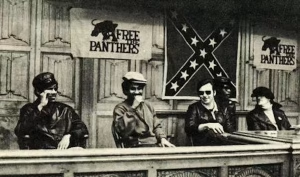
Fred Hampton, representing the Black Power Movement, reached a similar conclusion by a very different path. As a leader of the Black Panthers, he taught armed self-defense rather than nonviolence, and advocated revolutionary socialism rather than Beloved Community. But like King, he saw that the poor of different races were being exploited by the same economic and political systems. In Chicago, he had the Panthers build relationships with groups historically in conflict: the Young Patriots (a poor White activist group that wore Confederate flags) and the Young Lords (a Puerto Rican activist group). Together they formed the Rainbow Coalition, providing free breakfast programs, health clinics, and educational programs — far more together than any could alone. Hampton understood it was not just poor Black children who needed help; it was all poor children.
This approach expands the circle of concern. When we focus on solving the problems of one race, we can create competitiveness or resentment, inadvertently destroying the community we intended to build. Ironically, if we solve the problem of the poor, the Black community receives a disproportionate benefit — because the Black urban poor represent a disproportionate share of our country’s poor. Through the Transformative Justice process, as we identify past harms and current systemic issues, we should also ask whether those issues have affected other races, then build solutions that benefit poor children of every background.
The goal of Transformative Justice is not to punish one group at the expense of another. It is to heal past wrongs and create an environment in which those wrongs are not repeated. Expanding the circle of concern this way is far more likely to bring people together — and far more likely to end in the Beloved Community that Martin Luther King Jr. envisioned.
An Unlikely Coalition
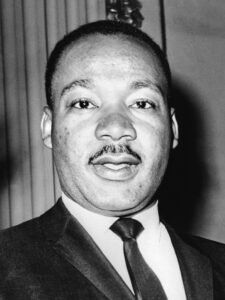
Dr. Martin Luther King Jr. Dick DeMarsico, Public domain, via Wikimedia Commons
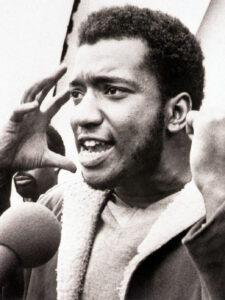
Fred Hampton, Illinois Black Panther Party
Beloved Community, then, is both the means and the goal. Transformative Justice not only takes the babies out of the river — it ensures that no babies are put in.
What Are Some Practical Steps You Can Take?
Join or start a “Be the Bridge” (BTB) small group. BTB is a book by Latasha Morrison designed for multi-racial groups, particularly in a church context. Its 10-session Building Bridges Discussion Guide walks people safely through a biblical framework of awareness, confession, and restoration. You can download the guide, find a registered local group on their national map, or start one in your own church.
Volunteer at a local faith-based mentoring program, like New Hope here in Lafayette, Louisiana. These programs train volunteers, provide coaching, and create structured environments where the mentoring relationship can thrive. If your community has none, Kids Hope USA partners one church with one local public school — completely turnkey, with the training, insurance, and curriculum provided.
Volunteer at an urban public school. Many districts partner with the United Way or other nonprofits to involve the community. Here in Lafayette, Love Our Schools runs Community and Family Engagement (CAFE) at most of our schools, including reading-buddies programs where you read with an elementary student for 30 minutes one day a week. Something like it likely already exists near you.
Volunteer with Big Brothers Big Sisters. Not a faith-based organization, but they provide training and mentor-child matches. One caveat: you might not find a cross-race fit.
Join foster care through The CarePortal. To help truly vulnerable children — and temporary foster parents — without hosting a child yourself, churches use CarePortal. A caseworker posts a specific, bite-sized need (“a grandmother needs a toddler bed to keep her grandkids out of foster care”), members get an alert, and can fulfill that turnkey request immediately.
Become a certified Respite Provider. For a deeper foster-care commitment, respite providers are temporary caregivers for children currently in the system. After a simplified background check and brief training through a local agency, you can watch a foster child for an evening, a weekend, or a few days.
Lend your own passions and skills. If you play chess, look for an urban chess club or school club. If you’re a carpenter, plumber, or entrepreneur, find a local Junior Achievement chapter — they provide the curriculum, kits, and training; you bring the experience. If sports are your thing, check for Upward Sports, a local YMCA program, or an inner-city youth athletic association.
Things won’t always go smoothly. There will be challenges, and at times it may be discouraging. But if you are persistent, you can be instrumental in changing a child’s destiny — and the life most transformed will be your own, as you learn to love the way Jesus loves.
Postscript
The parable of the “River Babies” is sometimes attributed to Saul Alinsky, who outlined practical tactics for community empowerment. Alinsky identified important social problems, but his methods often emphasized pressure and confrontation. Some view that as effective; I see it as divisive. His method might solve the immediate problem, but those coerced into doing what’s right will find new ways of oppressing the marginalized. The goal of Transformative Justice, by contrast, is to identify and address underlying causes so that similar harms never occur again.
Lasting solutions are more likely when problem-solving is grounded in mutual care and shared humanity. Ironically, while Alinsky’s method may have pulled babies out of the river, it was far less effective at ensuring no more were put in.
How we do what we do matters.



.jpg)