Dr. Nadine Burke Harris, known for linking adverse childhood experiences and toxic stress with harmful effects to health later in life.
When my wife, Kris, and I first started working with children in under-resourced neighborhoods, we were shocked by two things. First, the academic gap was staggering. The kids we worked with weren’t just a little behind; they were in a deep hole. On average, our students were two to three years below grade level. We later learned this isn’t uncommon for children growing up in poverty.
The data is clear: no single factor correlates more closely to a child’s academic performance than their parents’ socioeconomic status (SES). For example, fourth-grade children in poverty are typically two years behind their peers. Those from households in the bottom tenth percentile for SES are a full three years behind by fourth grade and four years behind by eighth grade. We were unaware of these statistics when we began. Seeing it firsthand shocked us.
The second thing we noticed was their behavior. Compared to the kids from our church and our own children’s schools, the children at our center were … let’s say they were much more energetic. They would arrive loud and boisterous. One child would toss his book bag in the air, while singing loudly and then jump into his chair. When it was time for homework, focus was a struggle. The kids would read one sentence or do one math problem and then start fidgeting—bouncing their knees, tapping pencils, looking around. They couldn’t sit still.
Playtime outside was where the real problems emerged. During our first year, we had at least one playground fight every week.
This was harder than we’d ever imagined.
One October afternoon, I was surprised to see all the kids playing together peacefully. I thought, “Hm, we’re making progress.” As I walked toward the playground, I noticed a second-grade boy standing alone, arms folded, with an expression that said, “There is nothing you can do to make me play with these children.” I walked up to him and placed a hand on his shoulder to talk to him. Apparently, he didn’t see me, and I startled him. He instantly spun around with his fists up, ready to fight. In that moment, it dawned on me: these children were stressed out.
We all know neighborhoods we wouldn’t drive through at night without our car doors locked and windows rolled up. Children live there. I had mistakenly assumed that kids growing up in those neighborhoods were immune to the fear I felt, but they’re not. In fact, they are hyper-vigilant, constantly on guard, and on the lookout for danger. The environments they live in generate toxic stress, which often leads to child trauma.
As our first year went on, I saw more evidence of this toxic stress. One day, a student named Ronnie told us he had a social studies project due the next day—a report with a display board. He hadn’t even started. We called his family and asked if we could work late. We drove him to Walmart to buy supplies to make his display board. It was dark by the time we walked him home.
The street was buzzing with activity. Teens were sitting on the hoods of cars, listening to loud music. “Street pharmacists” were plying their trade. I was out of my element and nervous, but tried to act natural. When we got to his door, he looked up and said to me, “It’s scary here, isn’t it?” I didn’t know how to respond. All I could muster was, “Good night. You did a nice job on your project.” I wasn’t the only one scared that night; a little boy who lived there felt that way every night.
 We began to research how poverty and stress affect children. I read Eric Jensen’s Teaching with Poverty in Mind, which highlights the many factors that contribute to low academic performance: poor maternal education, toxins in the home, noisy and crowded living conditions, lack of neonatal care, but one of the biggest contributors was toxic stress. Over time, Kris and I learned that the most impactful thing we could do was create a sense of “felt safety.” It wasn’t enough for the child to be safe;
they had to feel safe.
I also read Paul Tough’s How Children Succeed. Tough summarized a dozen major studies that shared a critical notion: certain preconditions must be met before a child is ready to learn. He shared one study on baby rats that demonstrated this perfectly.
Some baby rats were consistently “licked and groomed” by their mothers, while others were not. When placed in a maze, the nurtured rats solved it in seconds. The neglected rats, however, would freeze for over thirty seconds, shaking and hugging the wall. They would barely begin exploring the maze before time expired. These rats also developed health issues and died at a younger age. The researchers found that neglect leads to extreme stress in rodents and also alters their brain architecture and function.
It turns out that the same is true for humans. In the late 1990s, Doctors Vincent Felitti and Robert Anda conducted a groundbreaking study. They examined the effects of childhood adversity on a cohort of 17,000 mostly affluent San Diego suburbanites. They identified ten factors that were correlated with negative outcomes in adulthood. They labeled these factors “Adverse Childhood Experiences (ACE).”
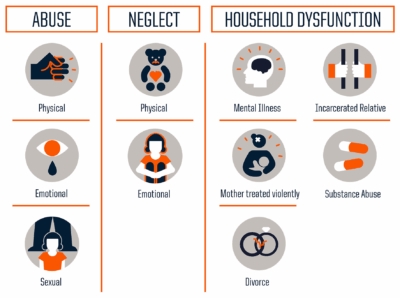
Two-thirds of the participants had experienced at least one adverse event (such as abuse or neglect) in their childhood. They found a powerful dose-response relationship: the more adversity a person experienced as a child, the more likely they were to have adverse outcomes, including behavioral, health, and social problems. For example, children with four or more ACEs are 32 times more likely to have behavior and academic deficits in school. Adults who had experienced six ACEs had their life expectancy shortened by 20 years. They also found that having just one caring adult could significantly mitigate these negative impacts.
Subsequent research has shown that childhood trauma is not only common but also intergenerational. The adversity a child’s parents experienced can transmit epigenetic markers that impact health and behavior over multiple generations. In other words, our genes keep a record of our trauma.
These studies confirm that toxic stress fundamentally changes the brain. The limbic system, our stress-response system, becomes overdeveloped, making the brain hypervigilant for danger. At the same time, the prefrontal cortex—the part of the brain that manages executive functions like planning, impulse control, and emotional regulation—tends to be underdeveloped. The result is a child whose body and mind are primed for survival, not for learning.
Based on this research, we shifted our focus at New Hope from pure academics to trauma-informed mentoring. We used homework as a tool for connection and trained our staff to ground our interactions in “felt safety” and build trusting relationships.
When children arrive, we greet them with warm smiles. We stopped yelling to make them behave. Instead, we were mindful of our tone and cadence. Instead of reprimanding, we used playful engagement. When a child is running in the hallway, we might say with a smile, “Hey, what are you doing there? You’re so fast! What’s the hurry?” We would then discuss why running inside wasn’t a good idea, and let them explain it to us. Then we allow them to do a “redo,” doing it the right way. This gave them agency and empowered them to make better choices.
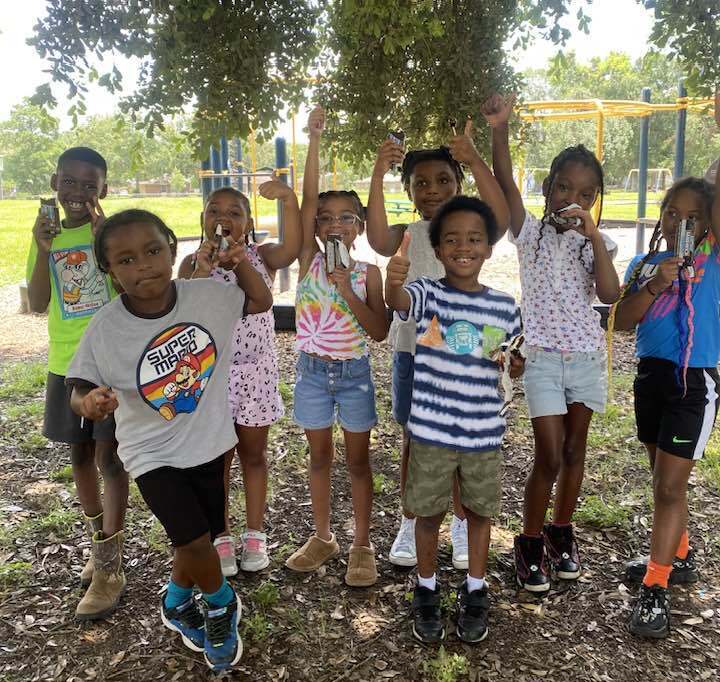
Once we implemented these trauma-informed practices, we noticed a dramatic change. The children were visibly relaxed. They would walk through our doors with a sigh of relief: they were finally safe. The playground fights disappeared. In the last ten years, we’ve had only two fights—one between a brother and a sister, so that one shouldn’t count. School behaviors also improved. In our first year, twenty percent of our elementary students were expelled. Now, nearly every quarter, 90% of our children get A’s and B’s in school conduct. Soon after, their grades began to improve, as well.
There’s a saying, “Our system is perfectly designed to give us the results we are getting.” Unmitigated childhood trauma often leads to terrible outcomes: dropping out of school, teen pregnancy, drug use, and incarceration. But trauma doesn’t have to be destiny. Studies show that one caring adult can make a world of difference. Science has proven this, and we have seen it with our own eyes.
Love works.